Mapping Regional Variations in Hybrid Gaming Formats Blending Strategic Elements with Reel Mechanics Across Digital Platforms
 Regional patterns in hybrid gaming formats continue to emerge as developers integrate strategic decision points into reel-driven systems across digital platforms. These formats combine elements such as player choice sequences with randomized reel outcomes, creating experiences that differ notably by jurisdiction and user base. Data from multiple markets show distinct preferences for how strategy layers attach to core reel structures. North American platforms often feature hybrids that embed poker-style selections or blackjack decisions within spinning reel sequences. Operators in regulated states report higher engagement when these strategic layers unlock during bonus rounds rather than appearing as separate phases. Figures from the New Jersey Division of Gaming Enforcement indicate steady growth in such titles during the first half of 2026, with mobile sessions accounting for the majority of play. European markets present different configurations. Operators there tend to separate strategic elements into distinct decision trees that influence reel probabilities over multiple spins. This approach aligns with platform rules that emphasize transparency in outcome determination. Observers note that these formats appear more frequently on desktop interfaces, where larger screens support detailed choice menus.
North American Implementation Patterns
Developers serving US and Canadian audiences frequently attach strategy mechanics to progressive reel systems. Players select paths that modify reel volatility while the base game continues its standard cycle. Several platforms introduced updates in spring 2026 that allowed real-time adjustments to these paths during live sessions. These changes coincided with expanded mobile compatibility across major app stores.
Regional licensing requirements shape how deeply strategy elements integrate. States with stricter payout verification rules often require clearer separation between decision points and reel results. This produces hybrids where strategic choices appear as pre-spin modifiers rather than mid-round interventions. Data collected through June 2026 shows these formats maintaining consistent play volumes in markets with established regulatory frameworks.
European and Asia-Pacific Contrasts
Platforms operating under European licenses apply strategy components in ways that emphasize session-long progression. Reel outcomes feed into cumulative strategy meters that unlock new reel configurations. This structure appears more commonly in markets where operators must display detailed probability information to users.
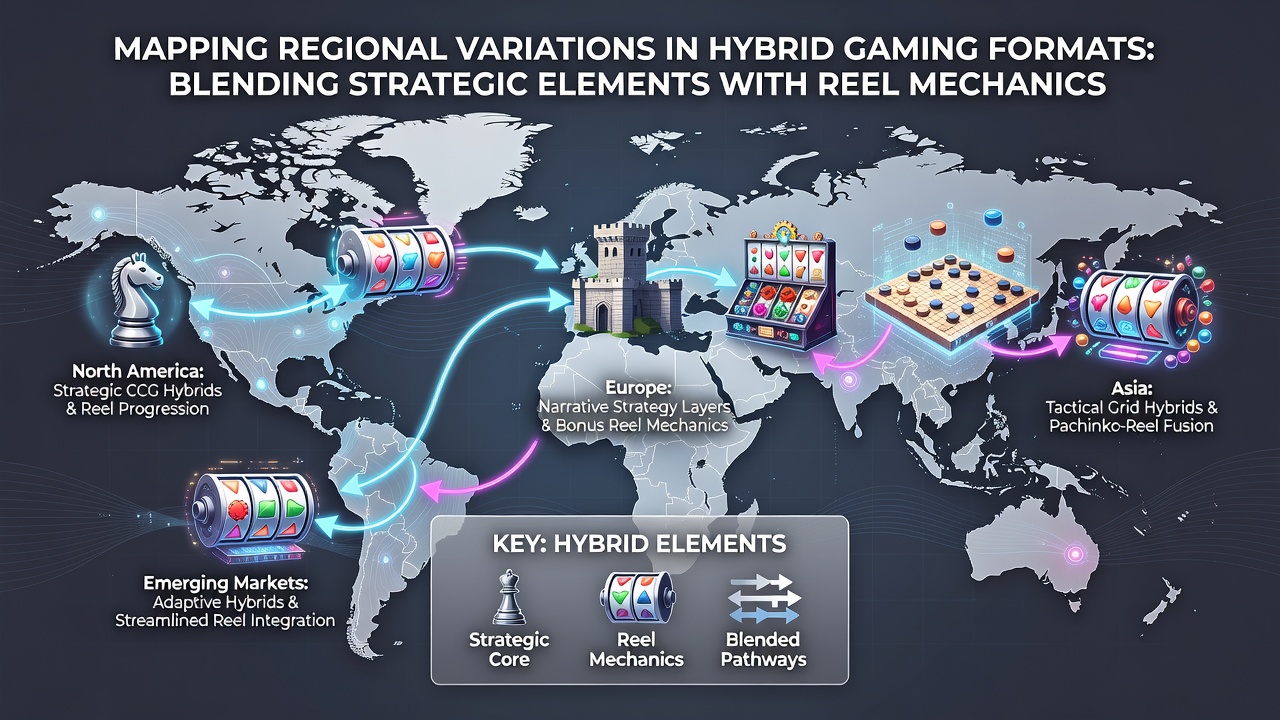
Asia-Pacific deployments show yet another variation. Strategic elements often connect to reel mechanics through collection systems that reward repeated play patterns. Platforms in this region frequently tie these collections to social features that allow users to share strategic decisions with others. Reports from industry analysts indicate these social hybrids gained traction following regulatory updates in several jurisdictions during early 2026.
Platform-Specific Adaptations
Mobile interfaces impose technical constraints that influence how strategy layers attach to reels. Touch-based selection systems require simplified decision trees compared with desktop versions. Developers address this by condensing strategic options into swipe gestures that alter reel behavior without interrupting the spin sequence.
Desktop platforms support more complex strategy interfaces. Multiple choice panels can appear alongside reel displays, allowing simultaneous management of both elements. This difference leads operators to maintain parallel versions of the same hybrid title, each optimized for its primary access method. Usage statistics reveal that users often switch between platforms depending on the depth of strategic engagement they seek.
Regulatory Influences on Format Design
Licensing bodies across regions enforce varying standards for how strategy and reel components interact. Some require independent testing of each layer to confirm that strategic choices do not override core randomization. Others focus on disclosure requirements that explain how decisions affect reel probabilities over time.
These regulatory differences produce noticeable format clusters. Markets with unified testing protocols tend toward tightly integrated hybrids, while those with segmented review processes favor modular designs where strategy and reels operate in distinct phases. June 2026 saw several jurisdictions publish updated guidelines that clarified testing procedures for these combined systems.
Conclusion
Regional variations in hybrid gaming formats reflect the interplay between technical capabilities, regulatory frameworks, and platform preferences. North American implementations emphasize integrated decision points within reel cycles, European versions favor session-based progression, and Asia-Pacific markets incorporate social collection mechanics. Platform adaptations further differentiate mobile and desktop experiences. As digital distribution continues, these regional patterns provide a framework for understanding how strategic elements attach to reel mechanics across different markets.